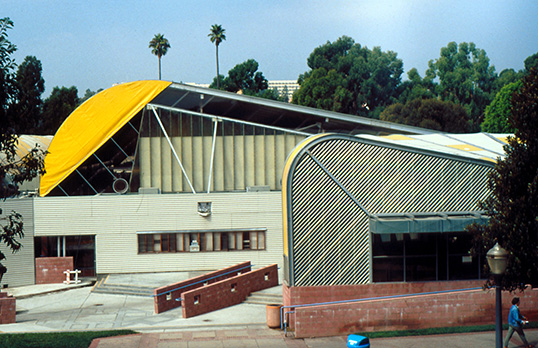
If modern architecture came about as a discourse to the traditional method of architecture, post-modernism was criticism towards modernism. Post-modernism architecture came about as a reaction against modern architecture for their formality and lack of variety, particularly in the style of the pioneers in architectural modernism, Le Corbusier and Ludwig Mies van der Rohe.
Popularised in the 1970s, post-modern architecture is commonly characterised by their eclectic and colourful style of architecture. As a contract to the “form follows function” and “less is more” concepts of modern architecture, architectural post-modernism features concepts of playfulness, bright colours, classical motifs and the variety of materials and shapes.
A key influence in the development of the post-modernism would be by American architect Robert Venturi with his book called ‘Complexity and Contradiction in Architecture’, published in the year of 1966. His book praised and agreed to both the works of traditional and modern architecture, extolling the Mannerist and Baroque architecture while also celebrating the popular modern culture of the American Main Street.
Learning from Las Vegas (1962) was also a fine example of contributing to the development of post-modernism. He used the signs and symbols of Las Vegas to deconstruct and rediscover meanings contained in classical architecture and applying them to modern structures, in which it resulted in a whimsical architecture embodying historical allusion.
Work Cited:
“Postmodernism.” Explore Architecture, RIBA. 2019.
https://www.architecture.com/explore-architecture/postmodernism

 Amienah Simangoon