Surrealism, a literary and art movement, came about as a reaction against the “rationalism” that had guided European culture and politics after World War I (Encyclopaedia Britannica). It grew principally out of Dadaism, but rather than the negation that Dadaism emphasises on, Surrealism focus on the positive expressions. Its goal was to liberate thought, language, and human experience from the oppressive boundaries of rationalism (Mann).
Several techniques can be observed in the practice of Surrealist art, though works of the Surrealist artists are too diverse to be summarised categorically as each artist sought their own means of exploration. Automatism, a practice of free association, is one of the many techniques Surrealists applied to their writing and artmaking that they believed unlocked the creativity of the unconscious (Artsy).
Surrealist painters experimented automatism with fantastic or erotic images, of which were either left originally conceived as incomplete suggestive images or was consciously elaborated upon by the artist by according to his instinctive response later on.
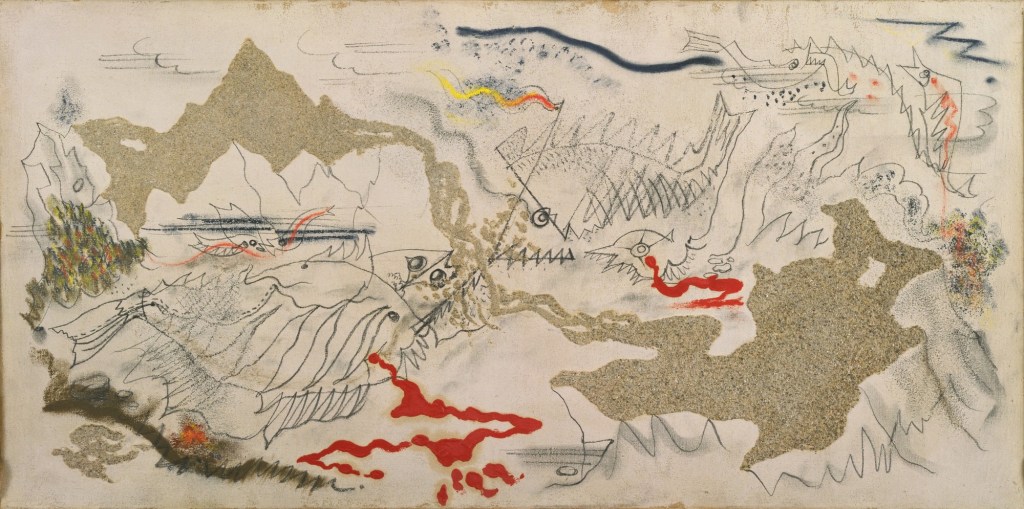
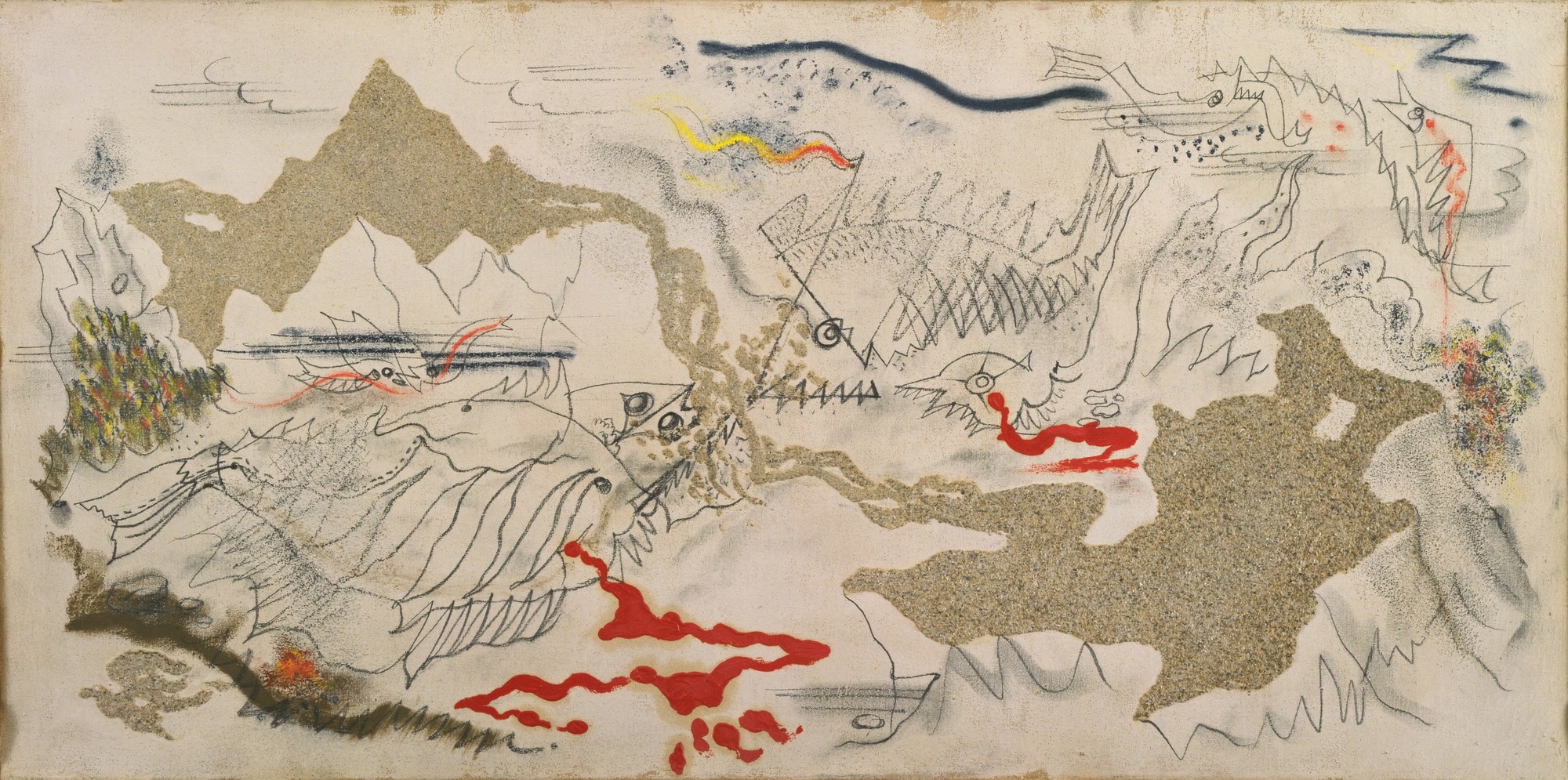
In André Masson’s ‘Battle of Fishes’ (1926), he explored the use of automatism in which he embraced the elements of chance in the unconsciousness to produce a surrealist painting. He had used gesso and let it freely fall across his canvas before throwing sand over it to doodle and paint around the resulted form. What came out of the unexpected result features two prehistoric fishes, jaws dripping with blood: an unconscious demonstration of the inherent violence of nature (Mann).
Works Cited:
“Automatism.” Artsy, 2020.
https://www.artsy.net/gene/automatism
“Surrealism, Art and Literature.” Encyclopaedia Britannica, 2020.
https://www.britannica.com/art/Surrealism
Mann, Jon. “What is Surrealism?” Artsy, 2016.
https://www.artsy.net/article/artsy-editorial-what-is-surrealism/

 Amienah Simangoon